
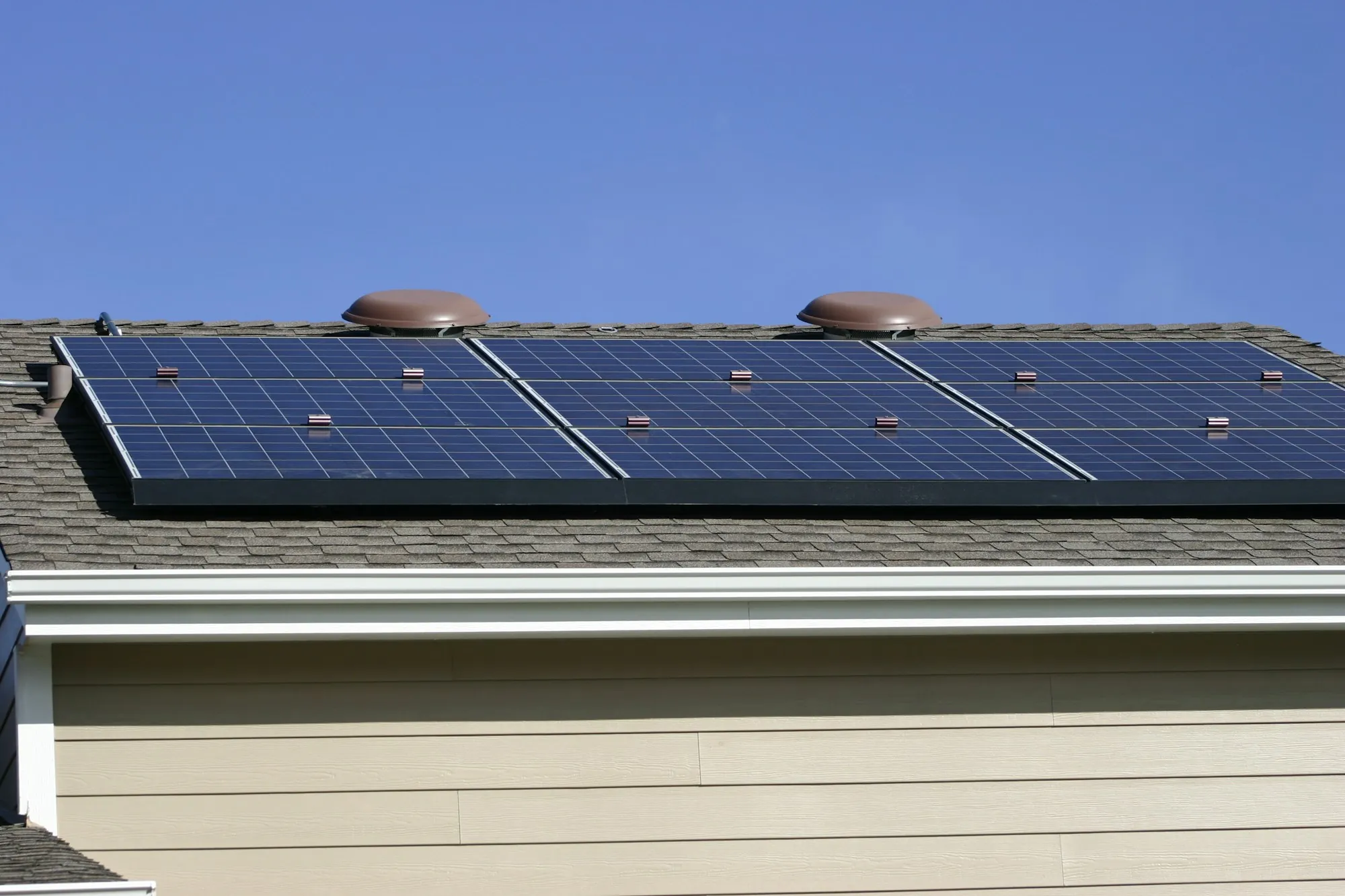
A solar array can come off a roof fairly quickly, but it can spend a long stretch on the ground while the roof is replaced. That stretch is where most of the risk lives. Panels get leaned against walls, connectors sit open in the weather, hardware goes into a bucket and a stack of modules ends up in the path of a dumpster. Protecting solar panels during removal is less about the moment they are unbolted and more about everything that happens between shutdown and reset. This guide covers what a careful crew does with the modules, the wiring and the small parts, and what a Palos Hills homeowner should ask before the work begins.
Protection Starts With a Record of the System
The first protective step happens before any tool touches the array: documenting exactly how the system looks and performs. A careful crew photographs the array, the mounts, the wire runs and the equipment on the wall, and records what the system is producing. Each module gets a position on a layout map.
That record does two jobs. It lets the crew put every module back in its original spot, which keeps the electrical design the same as the one that was originally approved. It also gives everyone a baseline to compare against after the reset. If output comes back lower, the before reading and photos make it possible to track down why instead of guessing.
Ask for a copy of the photos and the layout. A homeowner who holds that record is in a much better position if questions come up later about the condition of a panel or a wire.
Shutdown Comes Before Handling, Every Time
Panels must be shut down and isolated in sequence before anyone starts handling them, because a module exposed to light still produces voltage. OSHA’s solar hazards page lists arc flash, electric shock, falls and thermal burns among the serious hazards solar workers can face. A rushed disconnect is where those hazards show up.
The right order matters for the equipment as well as the people. Separating connectors while current is flowing can draw an arc, which is exactly the kind of hazard the shutdown sequence exists to prevent. Once the system is shut down, each circuit is isolated before conductors are separated, and connectors are opened deliberately rather than yanked. A crew that treats the disconnect as electrical work, not demolition, protects the parts that have to go back together later.
Modules Can Crack Without Showing It
The biggest hidden risk to a removed panel is cracking inside the cells, which often cannot be seen with the naked eye. Research sponsored by the U.S. Department of Energy and carried out with the National Renewable Energy Laboratory used electroluminescence imaging to quantify cell cracks in photovoltaic modules, testing a module through repeated mechanical loading and humidity and temperature cycling. The authors note the method could be used to rate cell damage after transportation, which tells you that moving modules around is a recognized source of damage.
The practical lesson is simple handling discipline. Modules are carried by their frames, ideally by two people, and kept flat or upright as the manufacturer’s instructions describe. Nobody steps on them, leans tools against the glass or flexes them while lifting. On the ground, they rest on padding or their own frames, never on gravel, rail ends or each other’s glass.
Connectors and Wire Need Their Own Protection
The wiring is the most fragile part of a removed array, and it is the part most often neglected. Each open connector is a doorway for water, grit and insects. Ends should be capped or bagged, cables coiled loosely without tight bends, and each string labeled so it goes back on the same circuit.
At reset, connectors matter even more. In a column for the International Association of Electrical Inspectors, John Wiles wrote that PV connectors should only be mated in pairs from the same manufacturer, since mixed pairs have not been evaluated for compatibility by an independent testing lab. The same column warned that ordinary nylon cable ties, even ones marked UV resistant, do not hold up over time. A reset is a natural point to replace worn ties and any damaged connector with a matching part rather than whatever is in the truck.
| Component | What can go wrong off the roof | How it should be protected |
|---|---|---|
| Modules | Hidden cell cracks from drops, flexing or standing on them; scratched glass | Carried by the frame, stored on padding, never stacked glass to glass |
| Connectors | Water, dirt or insects inside open ends; contacts damaged by a rough disconnect | Ends capped or bagged; reconnected only with matching parts |
| Cables | Kinks, crushed insulation, brittle ties | Loose coils, labeled by string, worn ties replaced at reset |
| Rails and clamps | Lost or mixed hardware, bent rails | Bagged and labeled by section, inspected before reinstall |
| Inverter and wall equipment | Moisture or impact during roof work | Left shut down and protected where it hangs |
Hardware Gets Counted, Bagged and Labeled
Rails, clamps, end caps and fasteners are small enough to disappear on a busy roofing job, so they need the same care as the panels. A careful crew bags hardware by section and labels each bag to match the layout map. Bent rails or stripped clamps are set aside and noted, not quietly reused.
Counting matters here. A single missing clamp can hold up a reset or tempt someone to improvise. Knowing exactly what came off makes it obvious, before reinstall, whether anything needs replacing. The mounts that held the old array to the roof are a different story: those come out with the old roof, and new attachments and flashing go into the new one.
Storage That Survives a Chicago-Area Reroof
Good storage keeps removed panels dry, stable and out of harm’s way for the full length of the roofing job. That usually means a garage, a covered area or a secure storage location, with modules standing or lying as the manufacturer directs, on padding, and well away from where the roofing crew stages material and debris.
Weather in the Chicago area can change quickly, and roofing schedules shift with it, so storage should be planned for longer than the ideal timeline. Panels left outdoors under a tarp in a driveway invite trouble from wind, standing water and theft. Ask where your panels will be kept, who has access, and how they will be protected if the reroof runs long.
Paperwork in Palos Hills Before the Reset
Palos Hills homeowners should check the city’s permit requirements before the detach is scheduled. On its building department permits page, the City of Palos Hills states that permits require property index numbers, registered contractors or hold harmless agreements, and in most cases a plat of survey. Whether the reroof, the reset or both need a permit is a question for the building department, so ask early. Nearby towns such as Hickory Hills, Worth and Palos Heights run their own departments with their own rules.
If the system is leased or financed, check with the lease company or system owner too. Some agreements set conditions on who can remove and reinstall the equipment.
What to Ask Before Anyone Unbolts a Panel
The question that settles most of this is a plain one: can the crew tell you, step by step, how your panels, wires and hardware will be kept from shutdown to reset? Ask to see the layout and photo record, how connectors will be capped, where the modules will be stored and how the system will be checked against its before reading. A crew with real answers to those questions has already thought about the damage you cannot see.
When you are ready to plan the solar side of a reroof, our solar panel detach and reset page explains how the work is sequenced, and Solar Panel Removal Palos Hills can also coordinate it with a roof replacement under solar. More on the full process is on our home page.